
This past month, I’ve been sharing stories of heroes from our past in the formation of our great nation. We are familiar with many of the fifty-six signers of the Declaration of Independence–John Hancock, John Adams, Sam Adams, Benjamin Franklin, but what about some of the other signers?
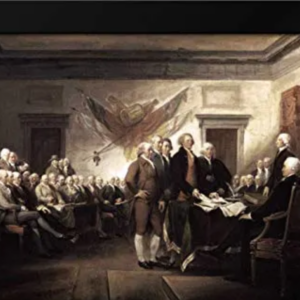
Signers of the Declaration of Independence
What happened to them? Here are some facts you might not know:
- Five signers were captured by the British as traitors, and tortured before they died.
- Twelve had their homes ransacked and burned. Two lost their sons serving in the Revolutionary Army; another had two sons captured.
- Nine of the 56 fought and died from wounds or hardships of the Revolutionary War.
- Twenty-four were lawyers and jurists. Eleven were merchants, nine were farmers and large plantation owners; men of means, well educated. But they signed the Declaration of Independence knowing full well that the penalty would be death if they were captured.
- Carter Braxton of Virginia, a wealthy planter and trader, saw his ships swept from the seas by the British Navy. He sold his home and properties to pay his debts, and died in rags.
- Thomas McKean was so hounded by the British that he was forced to move his family almost constantly. He served in the Congress without pay, and his family was kept in hiding. His possessions were taken from him, and poverty was his reward.
- Vandals or soldiers looted the properties of Dillery, Hall, Clymer, Walton, Gwinnett, Heyward, Ruttledge, and Middleton.
- At the battle of Yorktown, Thomas Nelson, Jr., noted that the British General Cornwallis had taken over the Nelson home for his headquarters. He quietly urged General George Washington to open fire. The home was destroyed, and Nelson died bankrupt.
- Francis Lewis had his home and properties destroyed. The enemy jailed his wife, and she died within a few months.
- John Hart was driven from his wife’s bedside as she was dying. Their 13 children fled for their lives. His fields and his gristmill were laid to waste. For more than a year he lived in forests and caves, returning home to find his wife dead and his children vanished. A few weeks later he died from exhaustion and a broken heart.
The Revolutionary War was hard fought and those who lived in those times were heroes.
I love reading history and about those lives in the past. Our Bible has a “Heroes of Faith” chapter in Hebrews 11. They list Abel as giving a better sacrifice. Enoch, who didn’t face death, but “God took him away.” He was commended as one who pleased God. There was Noah, Abraham, Sarah–who at age 90 gave birth to Isaac. There are many more mentioned in that chapter. What stands out to me is their faith.
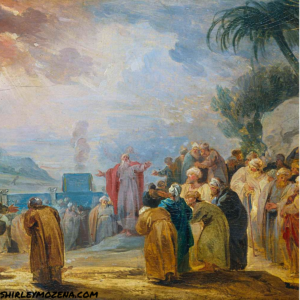
Moses in front of the Children of Israel
They did not receive the things promised; they only saw them and welcomed them from a distance, admitting that they were foreigners and strangers on earth (Hebrews 11:13 NIV).
What did the signers of the Declaration of Independence have in common with these heroes of the faith? Most of the signers were clearly members of Christian churches--twenty-nine of the signers attended seminary. They didn’t see what our country would be–only a vision of what would come. Freedom. Liberty. They had security in their lives before signing the Declaration, but they valued liberty more.
Remembering what those who’ve gone before us and what they have done is so important. Those heroes died before they saw what we are living today.
More can be said about the heroes listed book of Hebrews in the New Testament. I didn’t include Isaac and Jacob and Joseph and Moses and Rahab and Gideon and Barak and Samson and Jephthah and David and Samuel and the prophets…the world was not worthy of them (11:38).
May we be worthy of the liberty given to us by the unsung heroes and those we can easily name.
Get these Blog posts emailed directly to you.
I’ll close with this song–please take the time to watch and listen–I think you will enjoy it:
Check out the free books here: https://kingdomcollaborationnetwork.com




Hi Shirley,
I have learned a tremendous amount from your telling us about our history this month. Thank you!
Our founding fathers were heroes indeed, and we owe them so much!
I hope you and Jim are enjoying these summer days.
Love,
Jane
Such a wonderful song!
Ah, thank you Jane! I’ve loved reading these stories, too!
Jim and I are so busy, but we’re loving it–most of the time!
Love,
Shirley
I thought you’d like it!
Love,
Shirley
I enjoyed the song and the lyrics were inspiring. Thank you Shirley
As always I appreciate your perceptions and writing. The song—”Wow! I am listening to it repeatedly.” Thanks for this weekly labor of love.
Bless you!
Thank you Linda. It is a labor of love. All worth it! Blessings to you!
I’m so glad you liked it. It was new to me, but I liked it too!